

Your online store requires robust web hosting, including hardware, features, scalability, 99.99% uptime, and adequate website security measures to protect customers’ data.
Here are some reasons to review your options and decide which WordPress hosting for eCommerce sites is right for you.
With so many web hosts, seasonal entrepreneurs can get confused about which option to choose.
That is why I walk you through the steps you need to follow in today’s article to make the right WordPress eCommerce hosting decision.
No matter how big or small your eCommerce store is, you can trust a web host. The web hosts listed on this page suit small, medium, and large eCommerce store owners.
So, let’s start by reviewing the types of hosting available for eCommerce store owners.
4 Types of eCommerce Hosting
Before you begin, learn about the different types of eCommerce hosting and choose the best option for you.
This will help you decide. So, here are the 4 types of hosting to try.
For more information, see this detailed comparison of Shared vs VPS Hosting.
Also, I discussed what managed WordPress hosting is and shared some of the best providers.
7 Factors to Choose the Right eCommerce Hosting
There’s no single right or wrong way to choose the best WordPress hosting for eCommerce sites; each online store’s needs and size are unique.
Still, certain factors and criteria are essential for making the best hosting decisions.
Reviewing these factors brings you one step closer to finding the right web host for your eCommerce business.
Let’s check them.
Server Uptime Reliability
E-commerce websites require 24/7/365 online availability. The moment your website goes offline, you could lose thousands of dollars in sales, depending on your business size and customer base.
So check the web host’s server uptime guarantee policy and network status page to see service history updates.
If a web host has a history of service disruptions, that’s a red flag.
Your Store Size
When choosing a WordPress eCommerce hosting plan, consider your business size, target audience demographics, and expected traffic volume.
If your eCommerce business appeals to a global audience, choose a web host with global data centers, powerful CDN services, unlimited bandwidth, and more SSD storage space.
Traffic Volume
Expected traffic volume is another critical factor when choosing the right WordPress hosting for eCommerce sites.
Although you can scale your hosting plan at any time, choose one that matches your website traffic, boosts performance, and ensures 99.99% server uptime.
Technical Knowledge
Your hosting plan or type should align with your level of technical knowledge or comfort with hosting maintenance.
Shared hosting provides hands-off server management and maintenance, making it ideal for beginners. But you must accept the cons of Shared hosting, such as low server performance and limited bandwidth, storage, or RAM allocations.
With managed WordPress hosting, you don’t have to worry much about server-side maintenance. Your web host handles most tasks, making it an ideal option for beginners and marketing professionals.
Ecommerce Features
Look for web hosts with specialized eCommerce hosting features. These features might help your store scale up product listings, process orders, offer a seamless checkout experience, and provide global payment options.
Web hosts with additional eCommerce features or functions offer better hosting services and a deeper understanding of online store needs.
Hosting Budget
How much do you have to spend on hosting?
Your hosting budget plays a significant role in finding the right eCommerce hosting plan.
Aside from the primary cost of hosting, you should also consider add-ons and tools, such as themes, premium plugins, and other features that keep your website running smoothly.
Host Support
Customer Support is invaluable; you can’t ignore its importance.
Choose a web host with a good reputation for friendly, responsive customer support. If you’re in doubt, check out what other users have written about their experience.
Visit websites like G2, Capterra, and relevant Facebook groups for firsthand, unbiased user reviews. These are places where incentives or financial gains do not influence user opinions about product and service reviews.
Best WordPress eCommerce Hosting
By now, you should understand why choosing the right hosting type matters for your online store; now it’s time to review the top WordPress ecommerce web hosts on the market.
In no particular order, here are the top WordPress ecommerce hosting providers you should know.
1. WP Engine
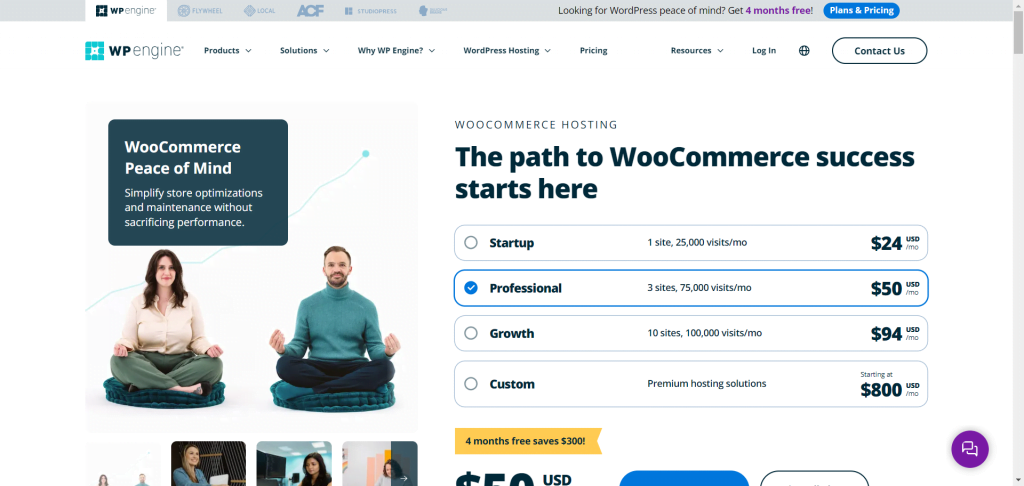
If you plan on building your eCommerce store with WordPress, WP Engine offers specialized eCommerce hosting for WooCommerce. Its hosting features are tailored to eCommerce store owners’ needs.
WP Engine focuses on managed WordPress hosting, which is an excellent option if you want to focus more on business than server management. WP Engine handles WordPress updates, security, plugin and theme updates, and server management.
Its technology stack leverages Google Cloud services, which provide global network connectivity.
With its built-in EverCache function, WP Engine delivers blazing-fast website performance, ensuring your eCommerce website loads quickly.
WP Engine eCommerce hosting is optimized for high-traffic websites, keeping your site available and running smoothly during traffic spikes.
Top WP Engine eCommerce Hosting Features
2. Cloudways

Cloudways offers powerful eCommerce hosting that allows you to easily scale hosting resources (RAM, CPU, bandwidth) from your dashboard. This will enable you to allocate hosting resources on demand.
It has optimized hosting stacks, including NGINX, Apache, PHP-FPM, and MariaDB/MySQL, that handle high traffic volume and server requests, ensuring high website performance and faster loading.
Cloudways servers are PHP 8-ready and are always updated to the latest stable PHP version in a timely manner. You can request, manually update, or downgrade your PHP version from your hosting control panel.
Cloudways partnered with Cloudflare to integrate its Enterprise add-on feature into its hosting offerings. This partnership provides additional security and performance enhancements to websites hosted on Cloudways’ infrastructure.
One advantage of Cloudways eCommerce hosting is that you can launch Magento, WooCommerce, Drupal, or WordPress sites with one click.
Top Cloudways eCommerce Hosting
3. Pressable
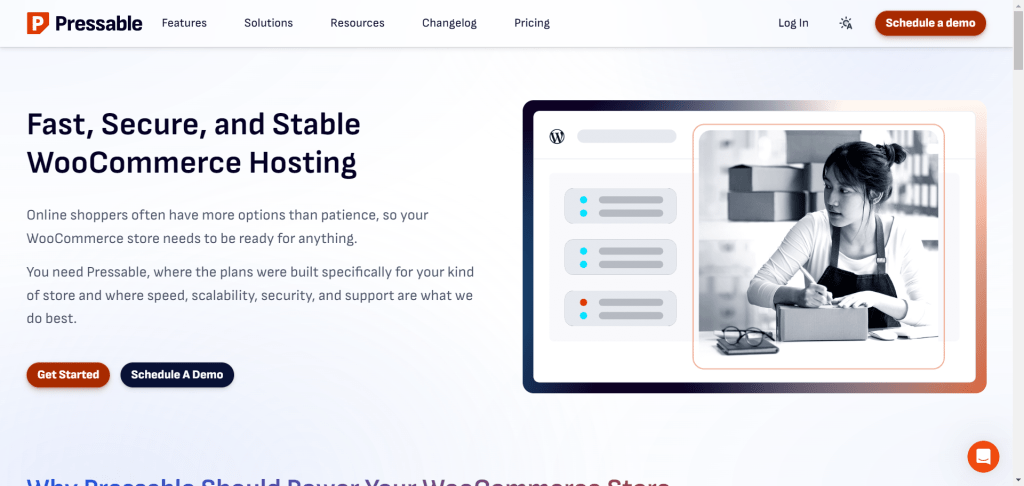
Pressable is a premier managed WordPress hosting solution, particularly well-suited for WooCommerce stores. Its speed, security, scalability, and exceptional support make it a compelling choice for businesses seeking to optimize their online store performance.
One key reason to consider Pressable for your WooCommerce store is transparency.
In reality, Pressable lives and breathes WordPress. This means every hosting feature is optimized for WooCommerce at scale. So, instead of the usual marketing gimmick from other web hosts, selling WooCommerce and WordPress hosting as two separate products, Pressable is built for both.
Pressable hosting infrastructure is built with scalability in mind. So, whether you’re heading into the holiday season, taking advantage of discount sales, or facing increased order demand, sudden traffic spikes won’t affect your hosting performance.
From solo e-commerce store owners to SMBs and large enterprise businesses generating over $10 million in sales, Pressable offers unbeatable WooCommerce hosting for peace of mind.
Top Pressable eCommerce Hosting
4. Namecheap
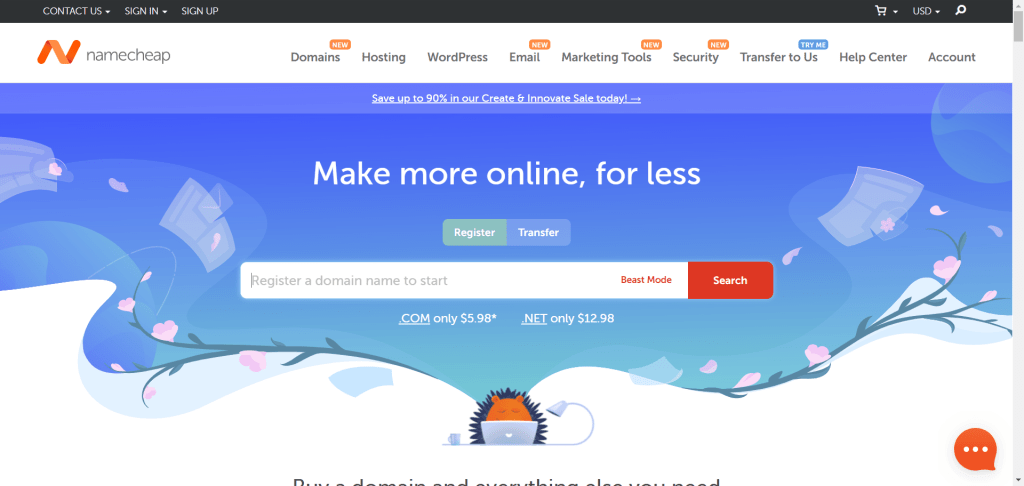
I always recommend Namecheap to beginner business owners for its ease of use and affordability.
If you have a small eCommerce site with low traffic, Namecheap offers excellent WordPress eCommerce hosting plans.
It offers several hosting options, including VPS, Shared hosting, WordPress-managed hosting, and Dedicated servers. These hosting options are optimized for online businesses and e-commerce stores.
You can choose Shared hosting or EasyWP-managed WordPress hosting, which offers faster performance through three layers of built-in caching.
Top Namecheap eCommerce Hosting Features
5. Hostinger
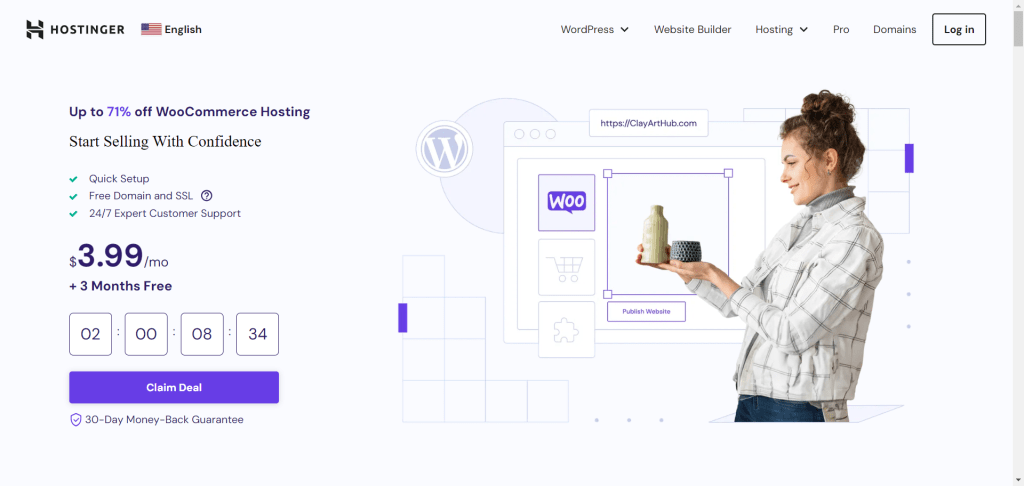
Hostinger is a well-established web host known for its robust infrastructure and feature-rich hosting services. It offers several hosting plans, ranging from Shared hosting to VPS, WordPress hosting, and dedicated servers for large enterprise businesses.
Hostinger offers eCommerce hosting specifically built for WooCommerce websites. Its eCommerce features are tailored to make running an online store effortless and fun. Built on LiteSpeed Web Server and the LSC WP plugin, Hostinger delivers a fast, optimal shopping experience for users.
It handles server-side management, security, performance, and updates, including WordPress, plugins, and themes. You also enjoy 24/7 eCommerce expert technical support.
NOTE:
For a more thorough look at what Hostinger offers- the AI Agents, Kodee, Object Cache, hCDN, hPanel, and how the performance stacks up in the real world- read my review after using the Unlimited plan for 30 days.
Top Hostinger eCommerce Features
Conclusion
Depending on your level of experience with eCommerce, you might want to check out WP Engine or Cloudways. Both options are the best I recommend for serious eCommerce store owners.
They provide cutting-edge hosting infrastructure and innovative technology, making it easier and more rewarding to run an online business.
In addition, Cloudways, Pressable, and WP Engine offer WooCommerce-specific hosting services that provide better value for money.
Other options, such as Namecheap and Hostinger, offer the best WordPress hosting for e-commerce sites. However, they’re better suited to beginners, entrepreneurs, and small-to-medium-sized business owners.
If you require more advanced hosting services, performance, and unbeatable website speed, WP Engine or Cloudways are top choices.